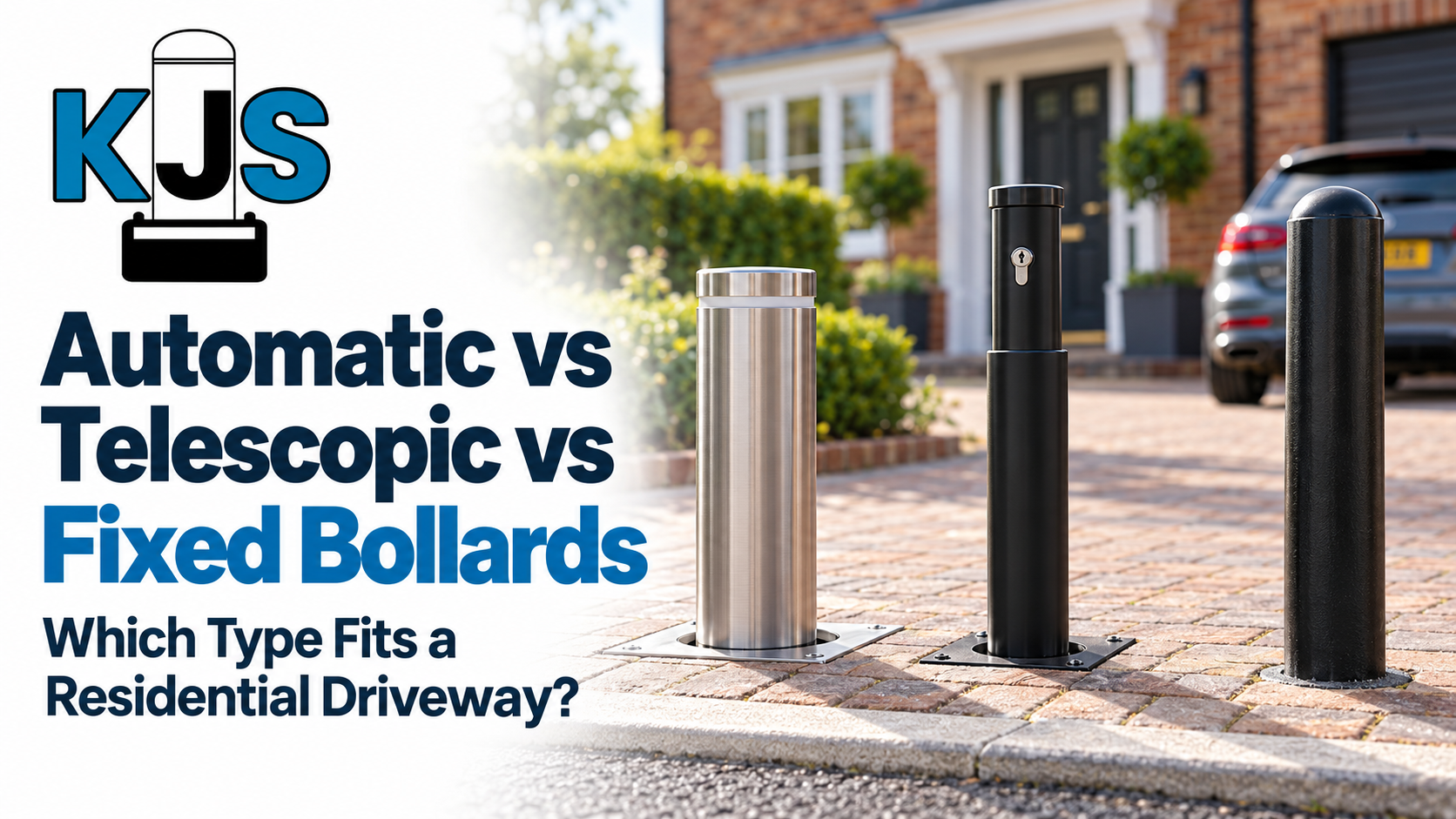
One of the most effective measures to protect your residential area is investing in bollards. They function as a visual guide to ensure that both pedestrians and vehicles follow the right pathway, and they also provide protection, ensuring that vehicles are protected from theft. Bollards come in different designs and manufacturing materials; as such, it's not about selecting any type of bollard. They serve the same function, but their mode of operation is different, and you would have to select features that are convenient for you in your residential area as you compare automatic vs. telescopic bollards.
Before selecting any type of bollards, check out this blog that has an automatic vs. telescopic bollards comparison so that you can select the right bollards for your residential area.
The different types of bollards
Automatic driveway bollards: These types of bollards have the ability to lower down and rise up again, which enables control for vehicle protection. They are housed underground with an electromechanical mechanism. They function by being triggered for the cylinder to push upward to block cars or down to allow vehicles to pass.
Characteristics of automatic driveway bollards
They are manufactured from heavy, durable stainless steel, which has the capacity to stop carjacking or vehicle theft.
As they retract down, they leave a flat surface to avoid bumps.
They have sensors for audible beepers and warning lights to detect vehicles and pedestrians.
They can last a long time despite impacts from different types of weather conditions.
Telescopic driveway bollards: These are manually posted bollards that are heavy-duty to function as strong physical and visual barriers, which are effective for vehicle protection and unauthorized parking. They operate by manually lifting them and securing them with a lock; hence, they do not need electrical wiring. When lowered, the post lies low, which allows cars to drive through when permitted.
Characteristics of telescopic driveway bollards
The surface is installed deep into the ground and anchored firmly.
They are designed to stop sawing, drilling, and ramming to trap vehicles and cars inside the driveway.
One bollard can be effective for a narrow car bay, but effective protection is dependent on the width of the entrance.
Fixed driveway bollards: Unlike other types of bollards, these fixed bollards cannot be retracted or manually moved; they are permanently installed in the ground. They are installed with concrete to provide a firm hold, making them immovable. They do not require daily operation or unlocking and have low maintenance.
Characteristics of fixed driveway bollards
The bollards are placed around property corners or utility equipment.
They are installed for permanent protection to prevent cars from being towed away from the driveway.
Unique qualities to understand when selecting the right bollards.
Operation and access mechanism
You would have to consider their method of operation to determine their convenience. The bollards are designed differently; they can be electric, manual or permanently stationed.
Security level and impact resistance
Consider evaluating the type of environment you are in; then you can select bollards that provide effective security in your area.
Material and weather durability
Select bollards that are suitable for the environment they will be constantly exposed to. Stainless steel withstands different types of environmental impacts; as such, it can last long and function effectively despite the changes.
Consider the groundwork to be done.
Different types of bollards require their own distinct way of installation; for example, retractable bollards may require an electrical connection so that they can sense, and the installation of fixed bollards should be deep into the ground.
Conclusion
Installing residential bollards is non-negotiable to protect your vehicle, and installing the right bollards makes their functionality excellent in all seasons. The best way to choose the right bollards is by understanding the differences between automatic and telescopic bollards, which helps you have an idea of what can work for you conveniently. Start by working with bollards manufacturers who are in the right position to guide you through your selection. KJS Bollards manufactures a variety of bollards that you can select from and also get delivered to your area conveniently.