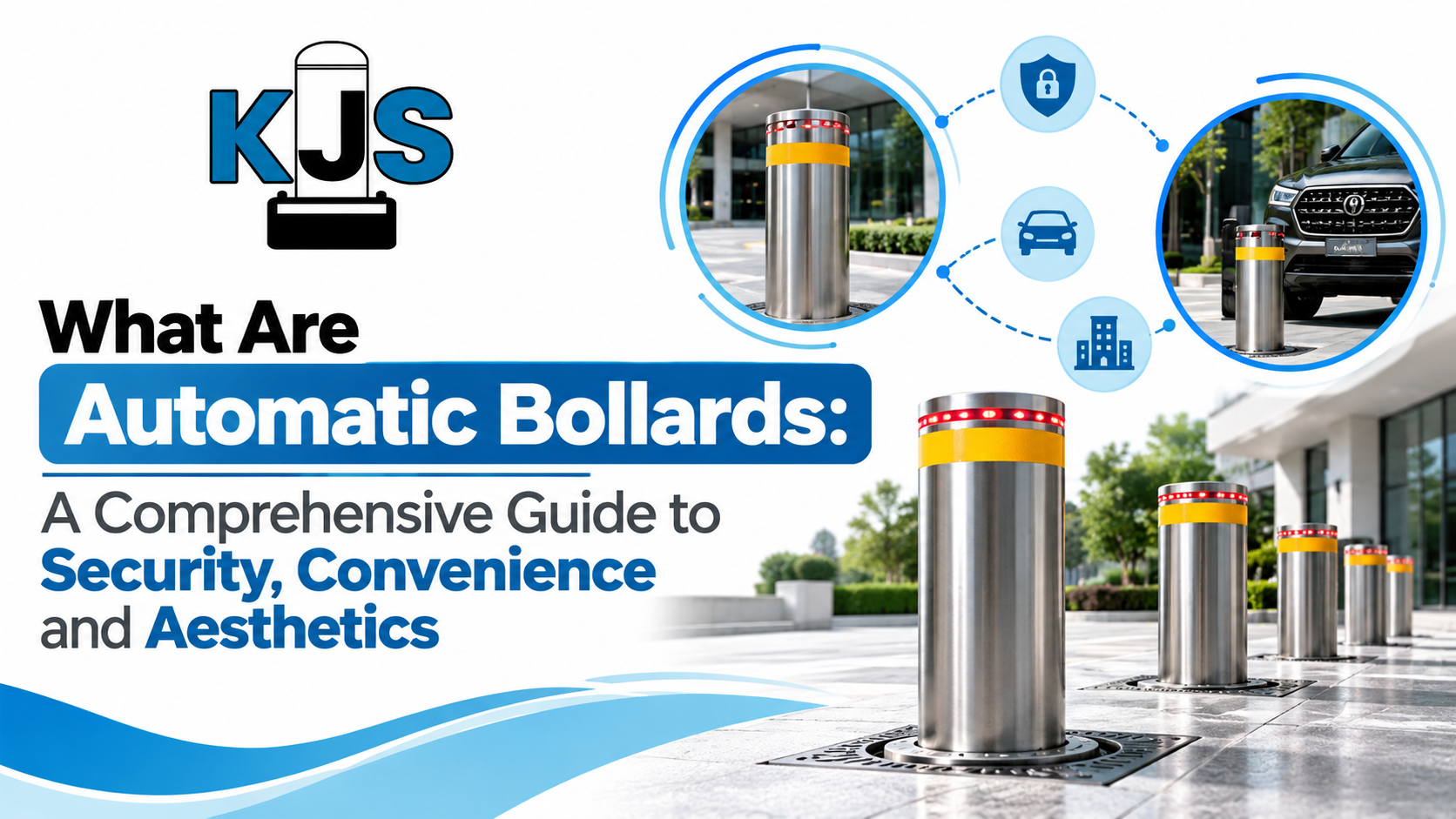
Rising bollards are a vehicle access control solution for sites that want security without affecting aesthetics because bollards are fully set into the ground. These types of bollards do not affect vehicle traffic when lowered and can rise within seconds when an authorised vehicle is detected. Automatic and manual bollards are used for the same security purpose because they create a physical barrier that helps to control vehicle access and protect public or private spaces. The main difference is how they work: a manual bollard is operated by hand, while automatic bollards are operated using a powered mechanism controlled by a remote or keyboard.
For many homes, a manual bollard provides the best security and minimum cost, but an automatic bollard can be more efficient, especially where an entrance is used more frequently. You can go through an automatic bollard power cut guide to learn more about automatic bollard power cut questions, as they are similar to every mechanical device. Automatic bollards have a bad day too; the first thing most managers call is the installer, but it is not always necessary. Many common problems are easy to fix that your on-site maintenance team can handle, but the most frequent problem is when automatic bollards cannot rise; then the first thing is to check the power supply.
Understanding what happened during automatic bollards' power cuts is important before choosing an automatic system. A manual bollard does not depend on the power supply because it can continue to be operated manually even during a power failure. However, an automatic system requires a procedure if there is a power failure, including:
A manual emergency release
Backup power supply
Immediate Steps During A Power Cut
Check the power source
Access the fail mode
Use emergency battery backup
Engage the manual override
Control traffic
Test batteries monthly
Consult the professionals
Automatic bollards are able to rise and retract from the ground automatically, providing flexibility. Bollards are installed to provide effective solutions for managing traffic, with features including:
Operate automatically for hassle-free access control
They are able to work in different environments, from urban centres to high-security buildings.
They are compatible with modern technology such as surveillance systems and remote control.
Are Automatic Bollards More Secure?
The bollard does not become more powerful just because it has a power supply, but its ability to act as a physical barrier depends upon factors including:
Construction of the post
Foundation of bollards
Locking arrangements
The way they have been installed
Difference between automatic bollards and manual bollards?
They are flexible, as they can lower and rise automatically without physical intervention.
They are compatible with smart systems
They are designed for security purposes in urban and public areas
Automatic bollards offer not only functionality but also maintain security and accessibility in different environments, which makes them a superior choice in modern access control.
Benefits Of Automatic Bollards
Enhanced Security And Safety
Prevent unauthorized access
Pedestrian protection
Hostile vehicle mitigation
Traffic Management
In high vehicle density areas, automatic bollards offer an effective solution to control the traffic flow and prevent blockage.
Dynamic access control
Streamlined traffic flow
Versatile deployment
Aesthetic And Practical Advantages
Blend with urban design
Space efficiency
LED integration
Environmental Benefits
Energy-efficient system
Durable materials
Minimal maintenance
There are numerous benefits of automatic bollards, which make them a preferred choice ranging from urban traffic management to high-security zones.
Where Can Automatic Bollards Be Installed?
Urban and public spaces
Pedestrian zone
Public parks
Event spaces
High-security areas
Governments facilities
Airports and ports
Crash-rated solutions
Parking management
Gated communities
Retail and business complexes
Emergency access
Seasonal restrictions
Construction zones
Conclusion
Automatic bollards have become an effective solution in modern infrastructure as they provide a perfect combination of security and design. The flexibility of automatic bollards makes them ideal for a wide range of applications ranging from high-security areas to urban traffic management. With the help of modern technology such as ANPR systems and remote controls, automatic bollards not only improve security but also make urban management smarter. Automatic bollards can be installed in public spaces or in residential areas. You can contact KJS Bollards if you want to install bollards for residential areas or public places, as we are passionate about delivering quality products to our customers.